
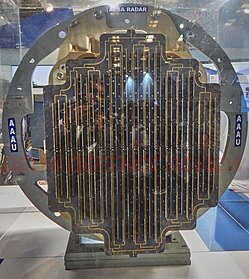
Indigenous ‘Uttam’ AESA Radar Outperforms Foreign Competitors; Set to Anchors India’s Frontline Fighter Fleet

NEW DELHI — In a major boost to India’s military self-reliance, the indigenous Uttam Active Electronically Scanned Array (AESA) fire-control radar has reportedly outperformed its Israeli counterpart, the EL/M-2052, by an impressive 25% during competitive flight trials.
Developed by the Defence Research and Development Organisation’s (DRDO) Electronics and Radar Development Establishment (LRDE), the Uttam radar has demonstrated superior detection range, tracking accuracy, and advanced resistance to electronic jamming. This technological triumph marks a decisive shift away from foreign sensor dependency, positioning India as a global player in advanced airborne radar technology.
Strategic Deployment Decisions
While the initial batch of the indigenous HAL Tejas Mk1A fighter jets is utilizing the Israeli radar to avoid delivery delays, the Indian Air Force (IAF) has locked in the Uttam radar for its long-term strategy. To sustain this momentum, HAL has placed a major ₹2,205 crore order for 122 Active Antenna Array Units, paving the way for full-scale serial production.
The radar is locked in for extensive deployment across the IAF’s expanding fleet:
- Tejas Mk1A (Second Batch): All 97 aircraft ordered in the subsequent tranches will natively feature the Uttam system.
- Tejas Mk2 & AMCA: An advanced, scaled-up Gallium Nitride (GaN)-based variant will serve as the primary sensor for India’s upcoming 4.5 and 5th-generation stealth fighters.
- Sukhoi Su-30MKI Upgrade: A massive, high-power version is being engineered to replace the older Russian PESA radars during the upcoming multi-billion dollar Super Sukhoi upgrades.
Defense analysts view this development as a watershed moment for the Atmanirbhar Bharat initiative.