
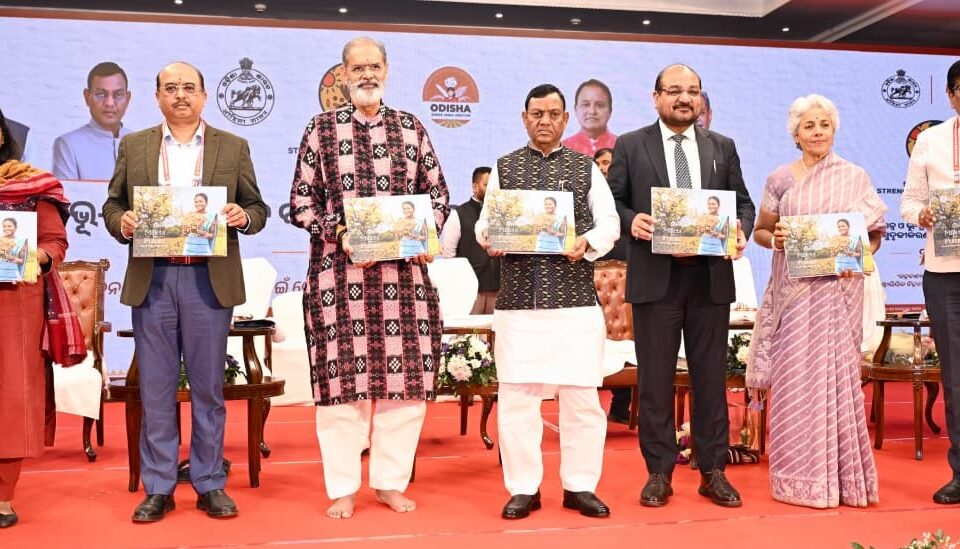

BHUBANESWAR: Governor Brajmohan Ram on Tuesday urged citizens—particularly youth, students, and government employees—to integrate Shree Anna (millets) into their daily diet, emphasizing that its promotion yields vital benefits for public health, farmers, and the environment.
“Every household should include Mandia, Bajra, Jowar and other millets in its meals. Adopting healthy food habits is not just about personal well-being but also reflects our respect for farmers and agricultural traditions,” Governor Ram said during his inaugural address at the Symposium on Shree Anna and Strengthening of Traditional Seed Systems–2026 in Bhubaneswar.
Highlighting millets as a cornerstone of India’s agricultural heritage, the Governor noted that these crops have sustained traditional food systems for centuries. In Odisha’s tribal and rain-fed regions, millet cultivation remains deeply intertwined with local livelihoods and cultural traditions. He remarked that scaling up the promotion of Mandia (Ragi) serves a dual purpose: elevating farmers’ incomes while safeguarding cultural heritage.
Turning to climate challenges—including erratic rainfall, rising temperatures, and widespread water scarcity—Governor Ram championed millets as a highly sustainable farming alternative. The crops require minimal water, carry low cultivation costs, and demonstrate robust resilience against adverse weather.
Furthermore, he underscored their exceptional nutritional profile. Rich in dietary fiber and essential nutrients, regular consumption of millets offers a potent dietary defense against rising lifestyle-related conditions such as diabetes, obesity, and hypertension.
To expand the footprint of Odisha’s millets across domestic and international markets, the Governor stressed the urgent need to fortify processing, packaging, value addition, and marketing infrastructure.
Addressing the second core theme of the symposium, Governor Ram called for a renewed focus on traditional seed conservation. He advocated for the establishment of community seed banks, thorough documentation of indigenous crop varieties, and organized seed exchange programs. Local varieties, he noted, encapsulate generations of agricultural knowledge and are vital to maintaining biodiversity.
Describing tribal communities and women farmers as the primary custodians of these resources, he recommended blending indigenous knowledge with modern science, technology, and robust market linkages.
The Governor lauded both the Odisha government’s Shree Anna Abhiyan and the Central government’s proactive millets initiatives. He concluded that unified efforts to conserve traditional seeds, shield biodiversity, and boost agricultural earnings will directly accelerate the visions of Viksit Odisha 2036 and Viksit Bharat 2047.