


JHARSUGUDA — The Indian Air Force is set to significantly bolster its long-range strike capabilities by inducting the Russian-origin RVV-BD missile system, a strategic move aimed at neutralizing high-value enemy assets like AWACS (Airborne Warning and Control Systems) and mid-air refuelling tankers at extreme ranges.According to reports by ANI, the Defence Acquisition Council has likely cleared the acquisition of the baseline R-37M missile system, branded for export as the RVV-BD. While official details remain cryptic, defense analysts speculate that a formal agreement could be finalized during Russian President Vladimir Putin’s upcoming visit to India.
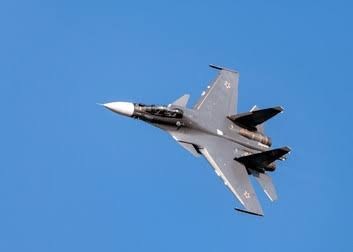
The procurement highlights a critical shift in the regional aerial doctrine. Recent border conflicts have seen neighboring air forces alter their rules of engagement, utilizing Beyond-Visual-Range (BVR) missiles from maximum distances to force opposing fighter jets into defensive postures, even without a hard radar lock. The introduction of the R-37M ensures that India’s frontline Su-30 MKI fleet can project power even further, forcing enemy force multipliers to break formation at distances exceeding 300 kilometres.
The announcement has triggered a debate within Indian defense circles regarding how the weapon compares to India’s indigenous Astra missile program. While the upcoming Astra Mark-2 and Mark-3 variants boast impressive ranges of 240 km and nearly 300 km respectively, experts emphasize that the R-37M belongs to an entirely different class of weaponry.Unlike the Astra Mark-2, which is a highly agile BVR missile designed to dogfight maneuverable fighter jets, the R-37M is a massive, heavy-duty “AWACS killer.” Weighing 510 kg with a length of 4.6 meters and a diameter of 38 cm, the Russian missile is nearly three times larger than the Astra Mark-2.
This immense size allows the R-37M to carry significantly more propellant and a massive warhead—roughly four times larger than that of a standard BVR missile. While physics dictates that such a heavy missile loses the agility required to chase nimble fighter jets, its sheer destructive radius compensates for reduced accuracy at extreme ranges. A larger warhead creates a massive blast cloud and wide shrapnel dispersion, ensuring that even a near-miss can catastrophically damage large, sluggish targets like tankers and command aircraft.
Initial public confusion regarding the deal stemmed from the “RVV-BD” nomenclature used in media reports, which many mistook for a downgraded export variant limited to a 200 km range. In reality, the IAF is acquiring the high-end baseline model, a system that successfully demonstrated its 300-plus kilometer engagement capability during its initial testing phase nearly two decades ago. The missile has also recently demonstrated high operational efficacy in ongoing combat operations in Ukraine.
While the induction of the R-37M addresses an immediate strategic requirement for the Su-30 MKI fleet, defense insiders suggest that India must simultaneously leverage its domestic programs. Using the technology foundational to existing indigenous platforms like the Rudram-1, India could eventually develop its own domestic class of ultra-long-range air-to-air missiles, mitigating long-term supply chain and production bottlenecks associated with foreign imports.